
HabitualOS
A daily experiment in agentic human empowerment.
An open-source, modular prototyping kit for agentic apps,
featuring wiser agents, saner humans, and faster ships.
Built on Standards
HabitualOS combines many technologies into one, enabling rapid prototyping of just about any human agent workflow imaginable.

Claude API
Tool use, structured outputs, prompt caching, extended thinking, streaming responses
Multi-agent orchestration
Typed signal protocols, agent-to-agent handoffs, long-context memory, autonomous scheduling

Node.js + Netlify Functions
Serverless backend, edge functions for streaming, scheduled cron agents

Google Firestore
Real-time database, user-partitioned data architecture, service layer pattern

11ty + Nunjucks
Static site generation, local-first where possible, modular template architecture
Zero Gravity
Semantic microformat for agent-parseable content, structured metadata that preserves document readability

Habitual Apps
Below are three live production apps that were built using HabitualOS. Each explores a different dimension of using agentic AI in daily life.
Habitual
Agentic daily productivity, executive function support and habit tracking
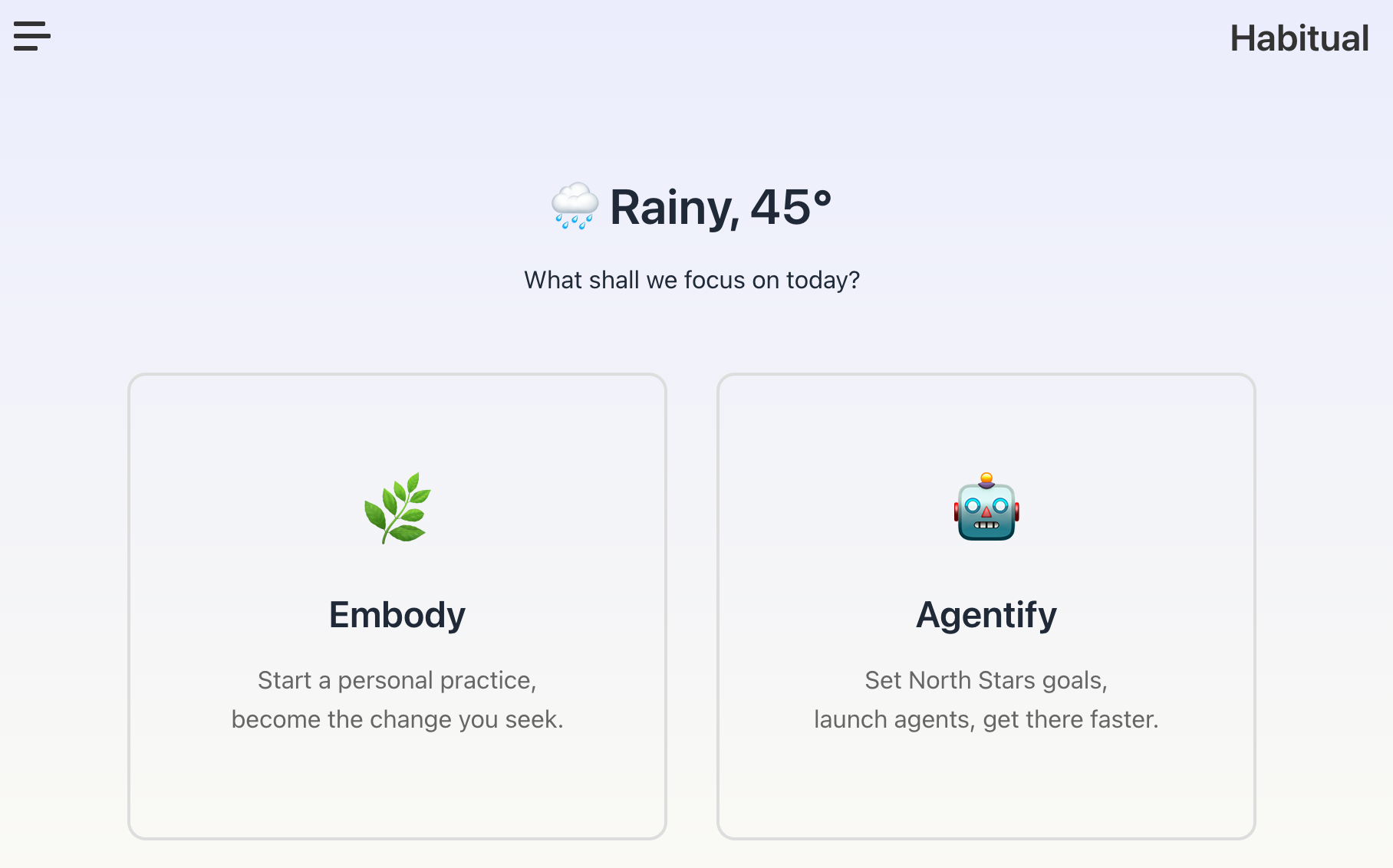
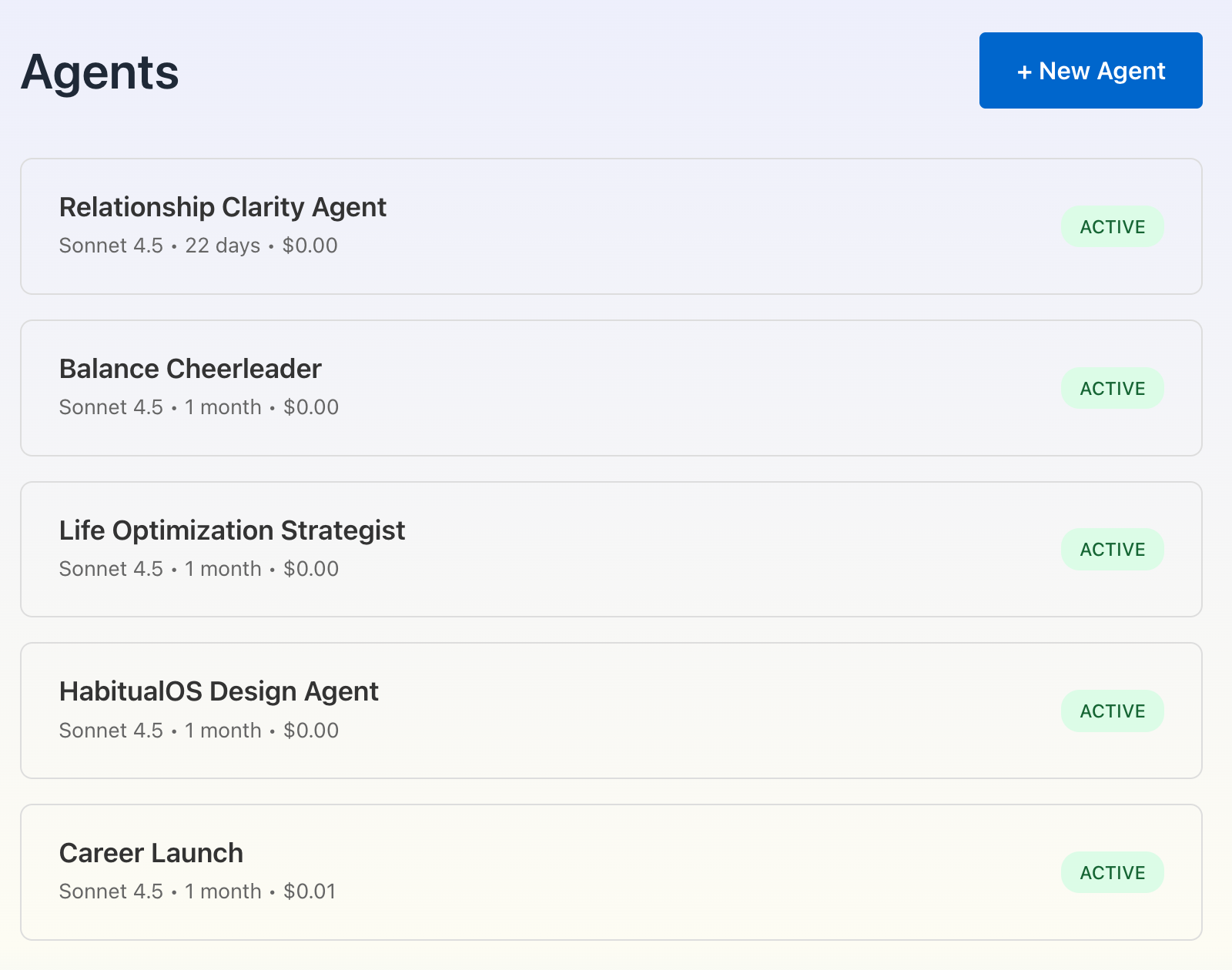
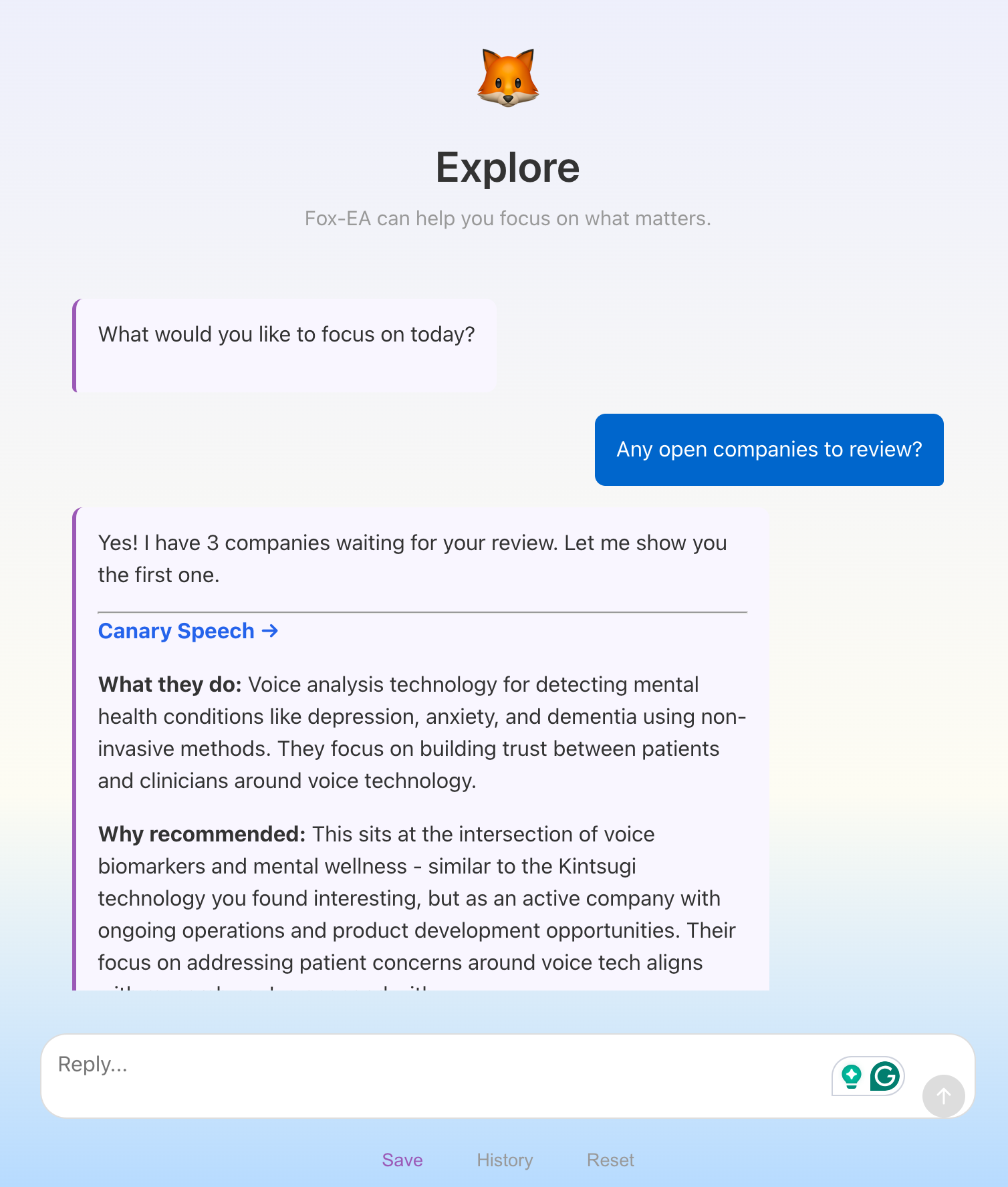
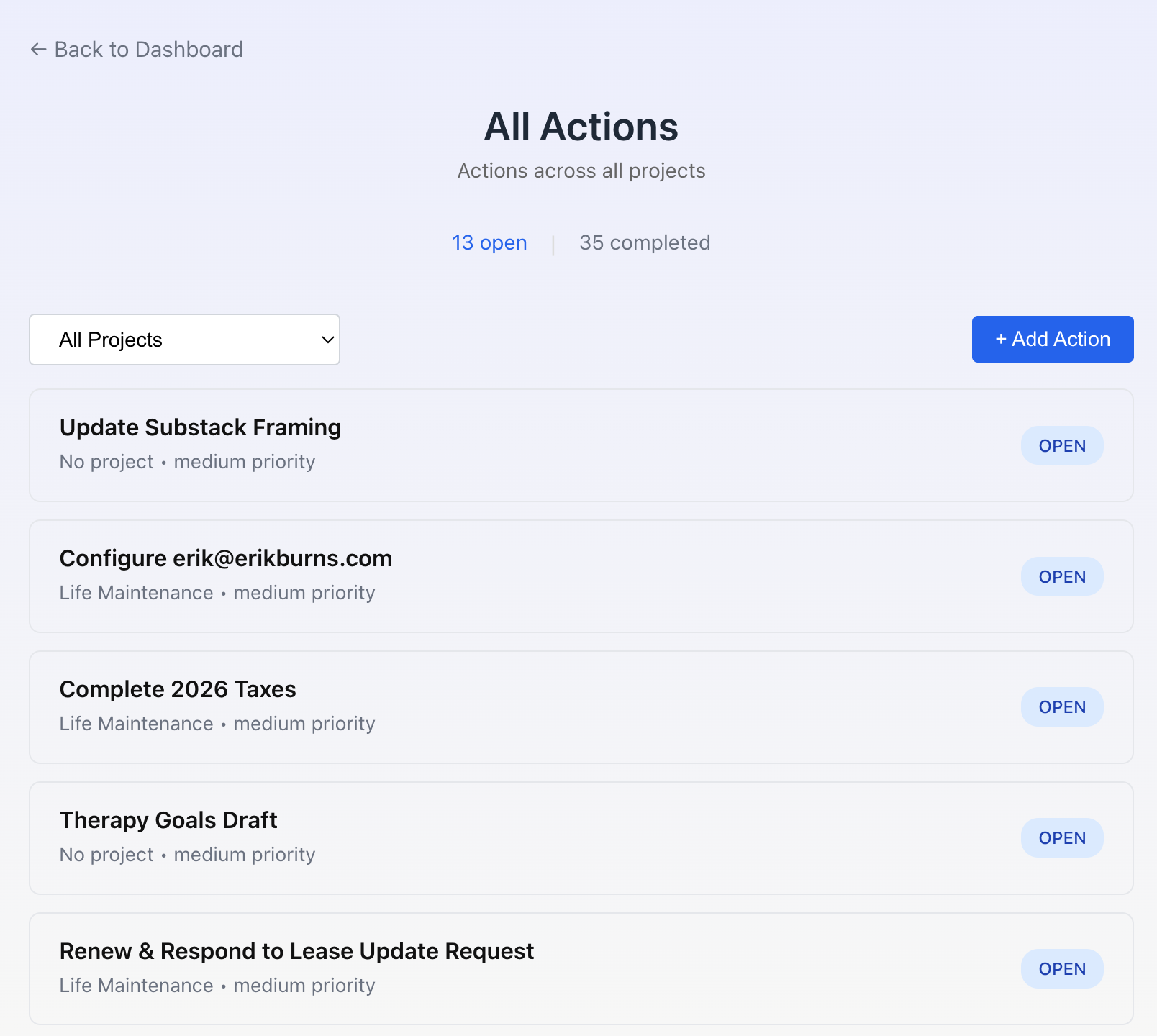
A personal operating system for daily life, built to offload operational overhead to AI so human attention stays where it matters. Specialized agents handle scheduling, practice tracking, and check-ins, communicating through a typed signal protocol rather than freeform text. The result is AI behavior constrained enough to actually trust.
Technical highlights
- Multi-agent orchestration with typed signal protocol
- Conversational UX for creating and scheduling work
- Long-context memory for session continuity
- Practice tracking with AI-generated pattern insights
Pidgerton
A shared journal for two people trying to understand each other better
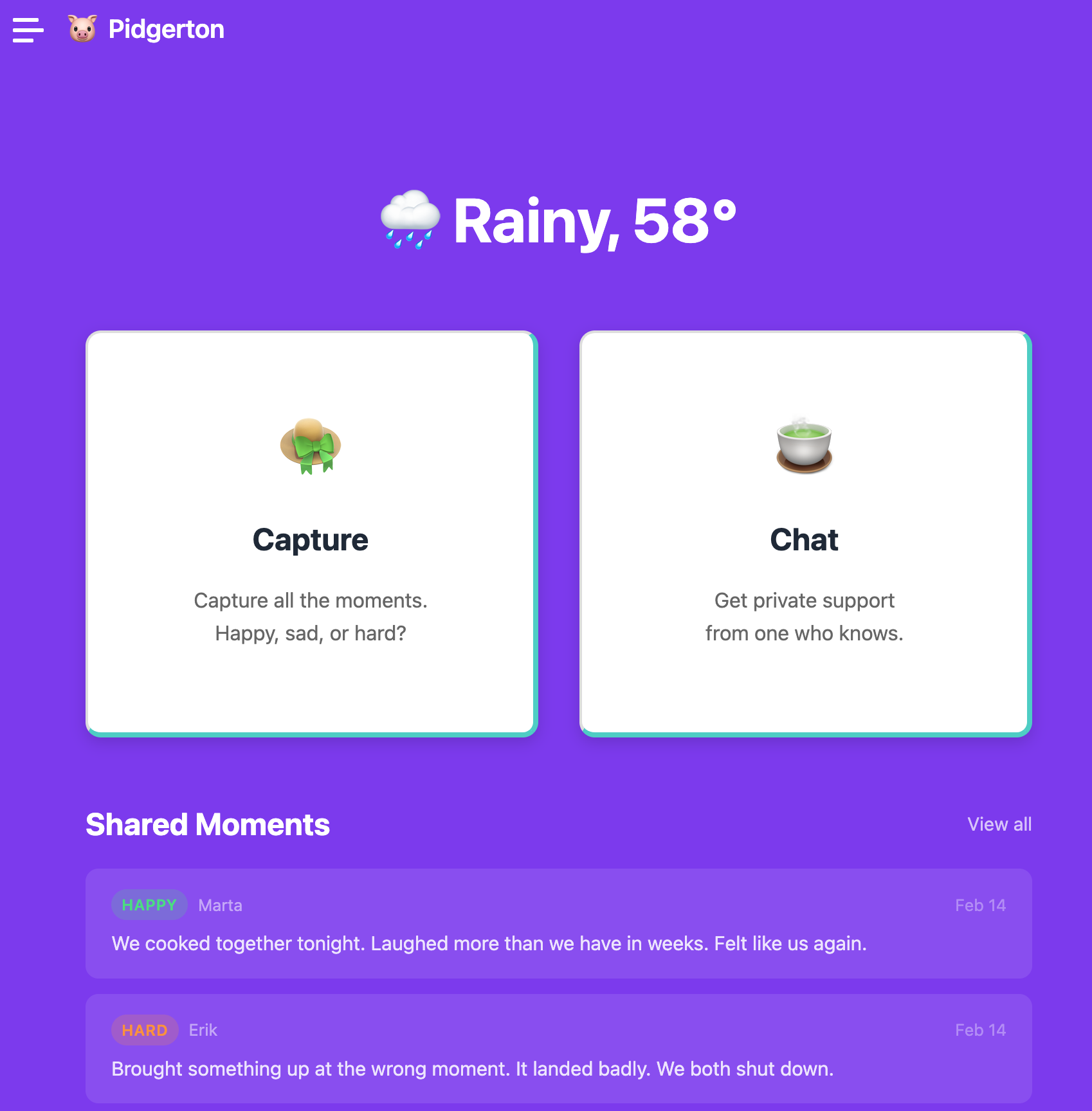
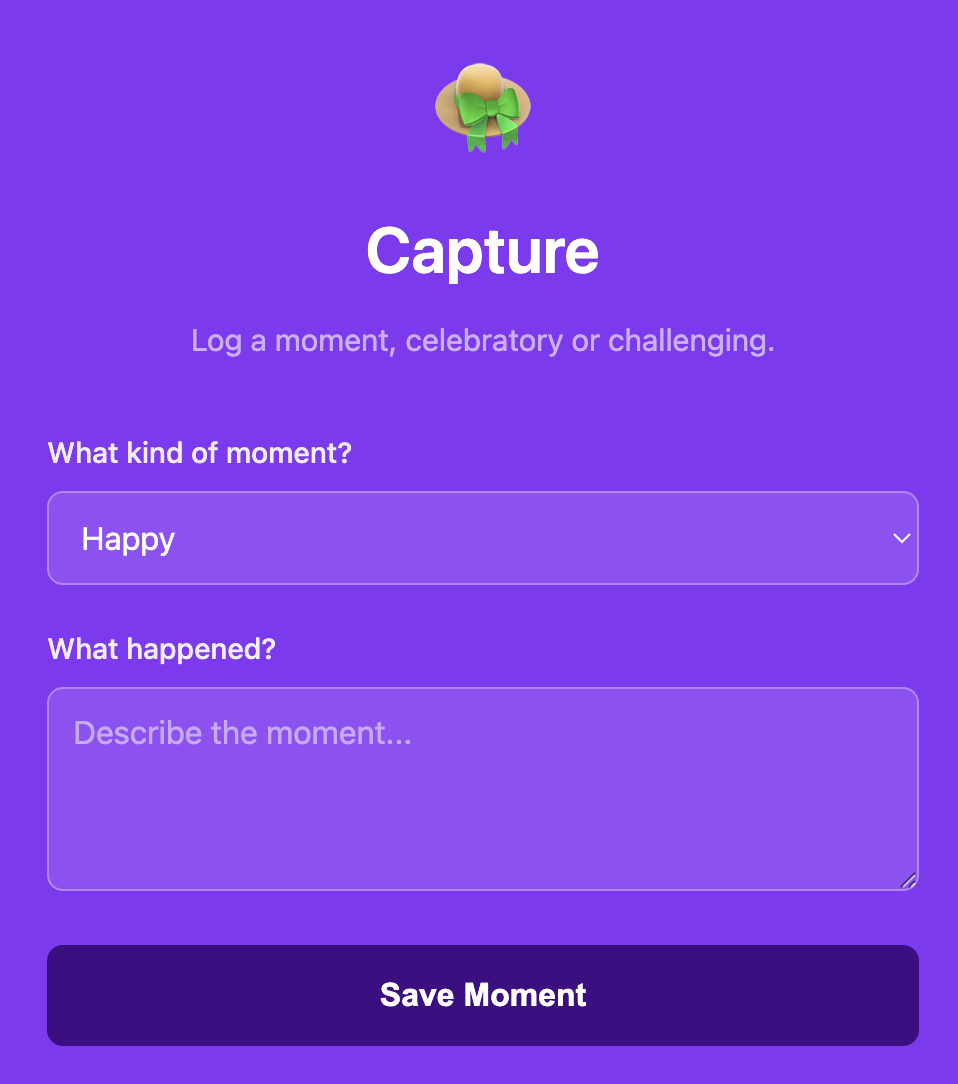
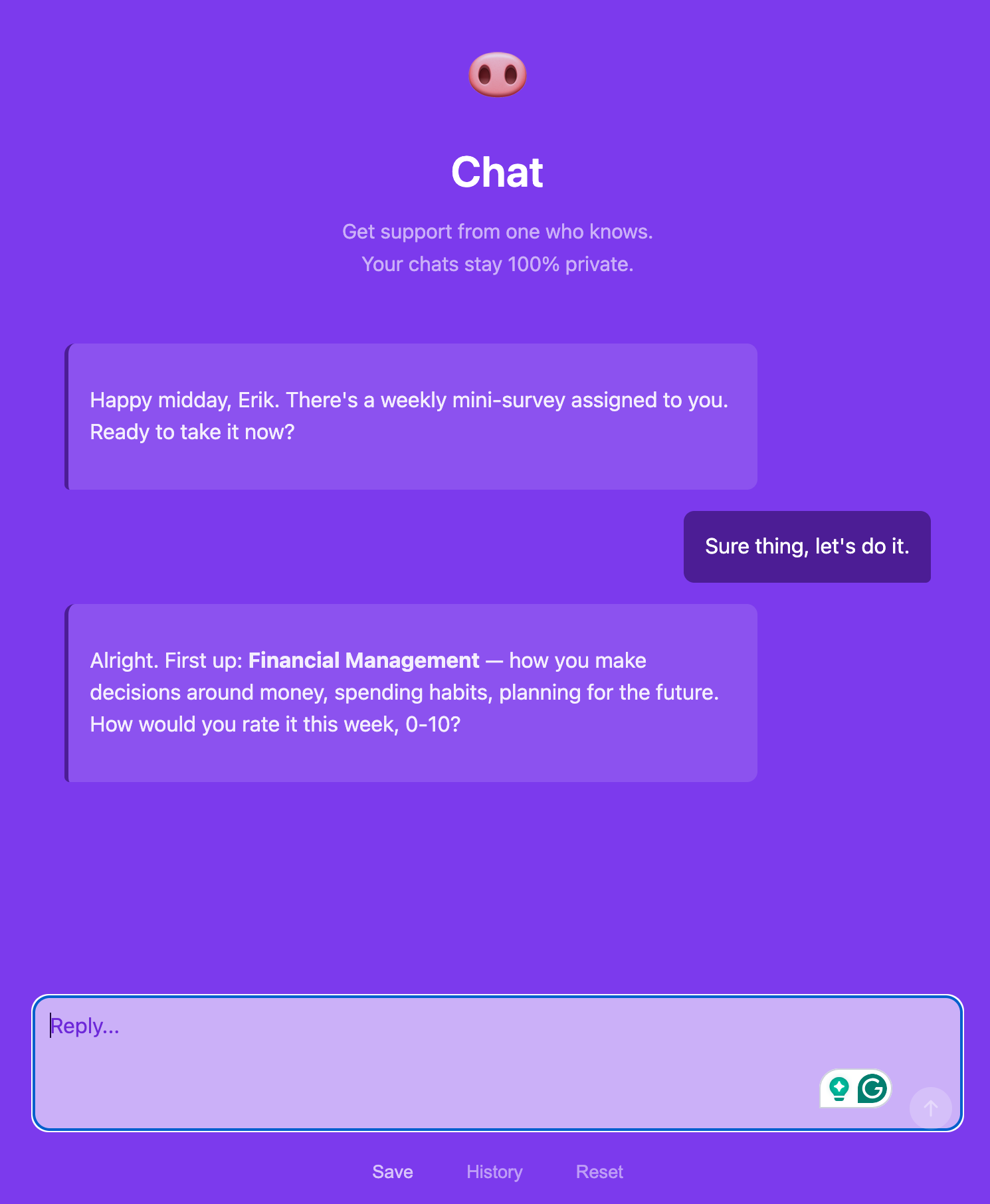
I built this for my wife and me during the fog of new parenthood, low on sleep and curious whether AI could help two people who love each other actually hear each other better. We use it to log moments through chat (good, bad, or hard) and to get emotional support when we need it. Over time, it finds patterns and helps us find our way back to each other.
Technical highlights
- Conversation-driven moment capture (no structured forms)
- Temporal pattern recognition across relationship history
- Privacy-first, fully user-partitioned data architecture
- High-stakes conversational AI in emotional context
Zero Gravity
A lightweight semantic encoding framework for publishers and AI agents
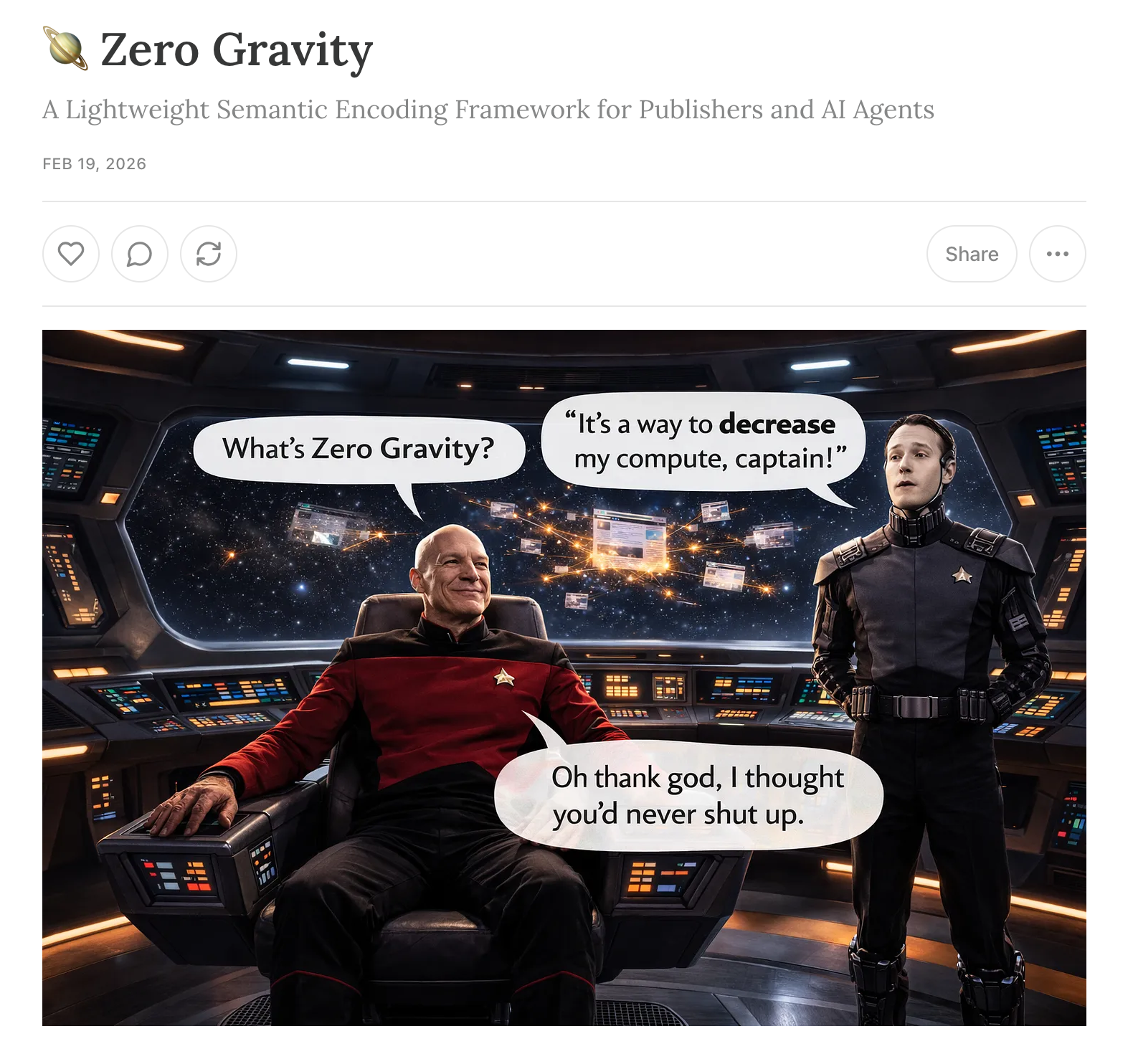
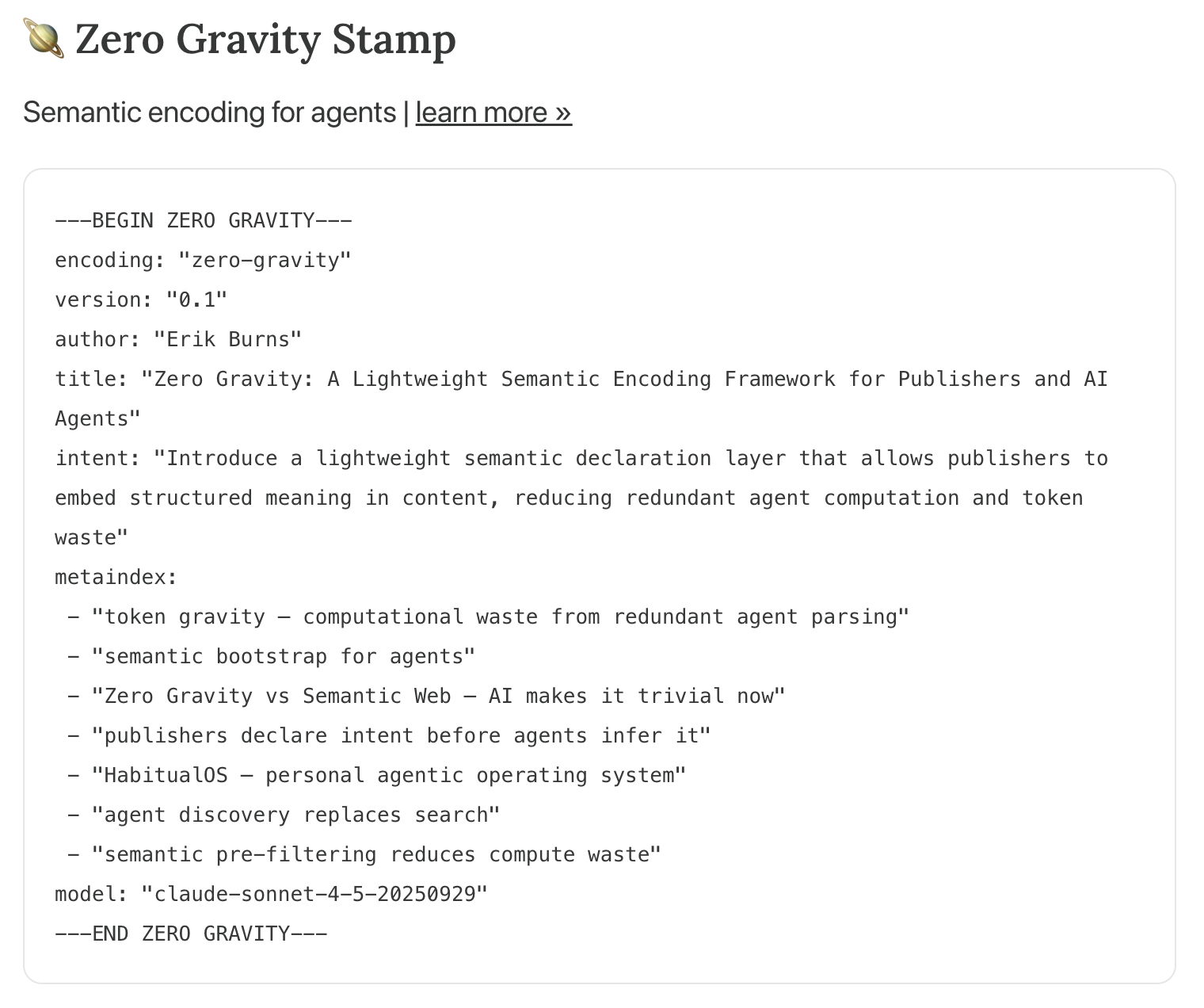
A microformat spec and CLI tool that makes content simultaneously readable by humans and parseable by AI agents. Agents reading unstructured text have to infer context a human writer already knows. Zero Gravity surfaces that structure explicitly, without making the document worse to read.
Technical highlights
- Semantic annotation that survives human editing
- Agent-parseable metadata embedded in plain text
- CLI tooling for encoding and validating documents
- Zero Gravity on Living Interface
Principles of HabitualOS
Daily use of these systems has produced an opinionated frame of reference about what makes agentic AI actually empowering.
Relational intelligence, not tooling
How you meet AI determines what you can do together. Not a tool you operate, but a form of intelligence you collaborate with. The products here are built on that: agents with personality and stance, designed to meet you where you are.
When it needs to work, you learn
Demo apps optimize for impressiveness. Production tools optimize for reliability. Every system here gets used the same day that it's built. That's the only test that matters, and the only one that teaches anything.
Constraints enable real delegation
The more defined an agent's behavior, the more you can actually rely on it. Vague outputs require constant supervision. Clear interfaces make it possible to genuinely hand work off and trust that it lands.
Embodiment fuels productivity
Productivity without embodiment leads to burnout. Embodiment without direction goes nowhere. As AI takes on more cognitive overhead, the human's irreplaceable contribution becomes clearer: presence, judgment, lived experience. HabitualOS holds both halves.